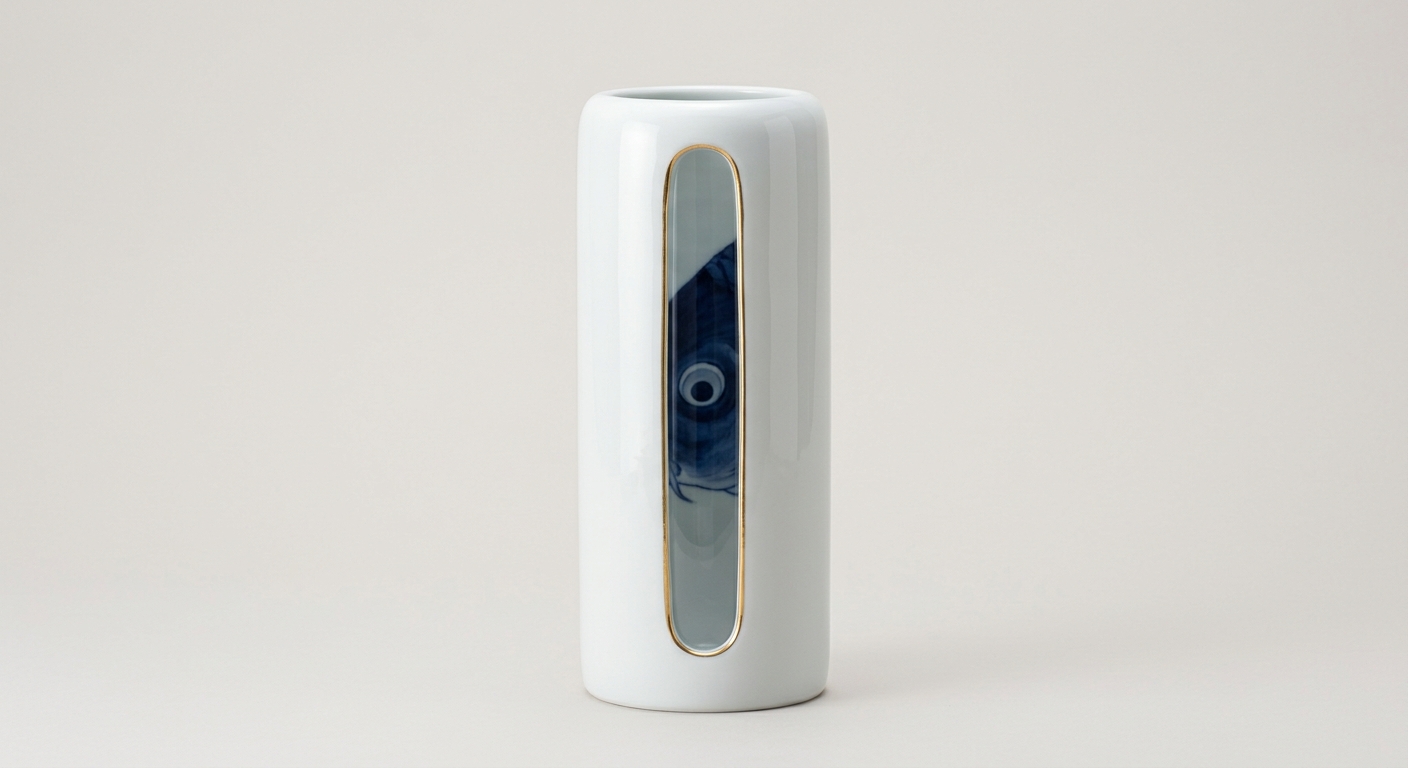
A studio rooted in centuries.
In the prefecture where I live, I know of two kintsugi artisans.
Elsewhere outside the capital region it is much the same: one or two, and neither can afford to train a successor. The work no longer earns enough to keep an apprentice, so no one is recruited, and the craft ends quietly, one workshop at a time. It is not only kintsugi. Across Japan's traditional crafts, fewer buyers has meant smaller incomes, and smaller incomes have meant fewer people who choose the trade.
I founded Hizensui at seventeen. With less behind me than the masters have, I also had less to unlearn, and I used that to ask a question the tradition had no reason to ask: why does kintsugi begin only after something breaks?
Hizensui draws the break first. The seam becomes a line of design, in urushi and gold, on objects that did not exist before — made by the hands the craft still has.
— Yoshiki, Founder
A studio rooted in centuries of practice.
On the lineage the studio draws from, and on the discipline that the work continues.
Kintsugi is a Japanese practice of joining broken ceramics with urushi and gold. It was refined within tea ceremony culture from at least the sixteenth century. The seam, in this tradition, is not a wound. It is the place where the maker has looked most closely.
Saga, on the western edge of Kyushu, holds a parallel lineage in fired clay. Karatsu ware has been made in this region since the late sixteenth century. Arita ware, the first true porcelain produced in Japan, since 1616. Hizensui begins downstream of these traditions — and of the urushi, the gold, and the lacquer-wood the work requires.
The studio is small. The Founder sits as Studio Director. The hands belong to the studio. The product that leaves the studio carries one signature: Hizensui.
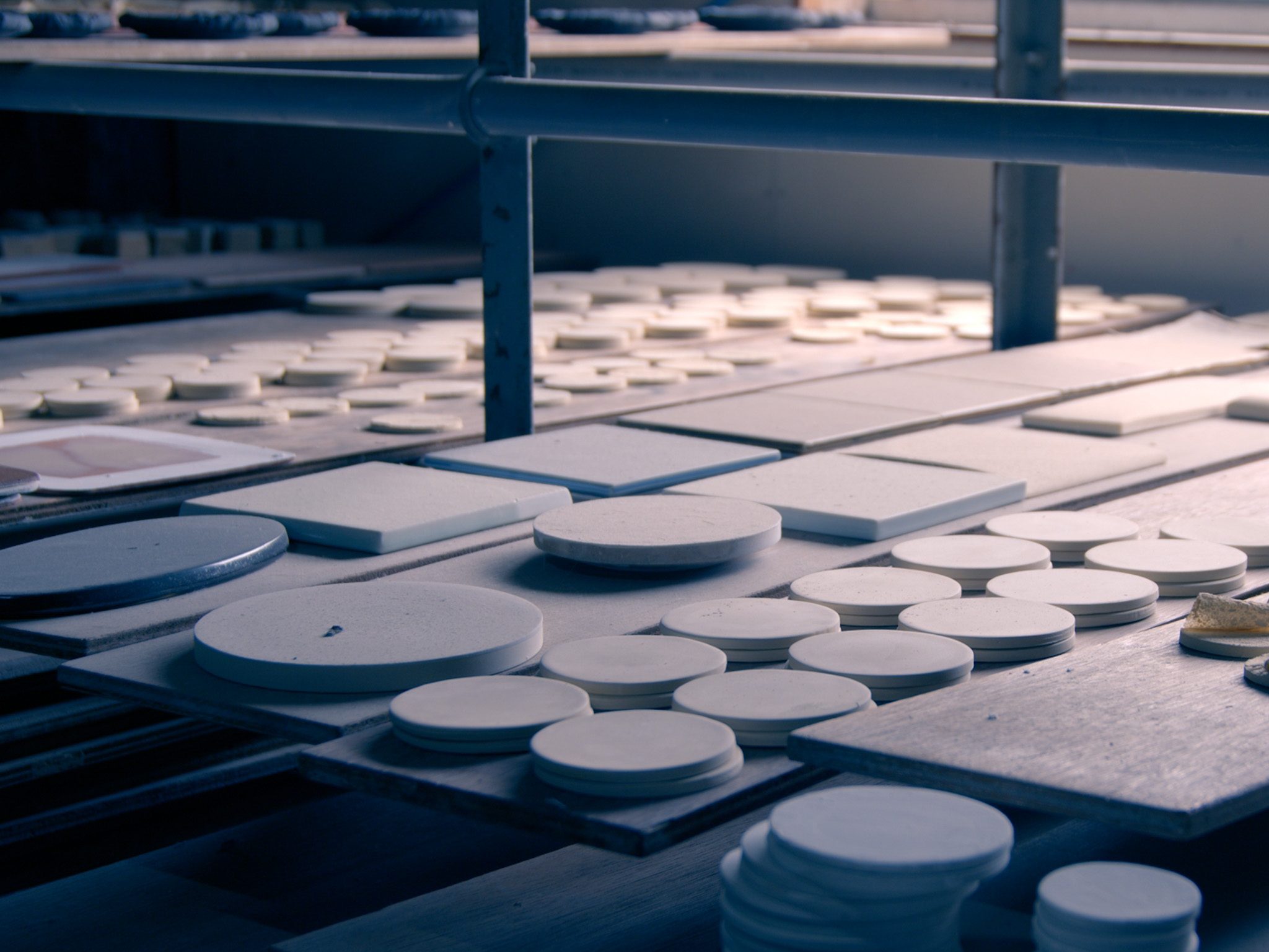
The discipline is held. The forms are new.
On three quiet observations, and on the studio's reading of how a tradition is best continued.
Three observations brought the studio into being. The first is that the hands are growing fewer. Each year, fewer hands tap the urushi tree. Fewer beat the gold leaf. Fewer fire the climbing kiln. A tradition kept in books, in glass cases, in documentary films is honoured; but it is a tradition that has stopped working. The studio places its standing orders so that the hands may continue.
The second is that these crafts have grown quieter at home. The rooms in which they once lived — the tea house, the temple hall, the daimyo's reception room — are fewer now. Hizensui composes for the rooms that will listen, wherever in the world they may be.
The third is that the forms a tradition has long made are not the only forms it can make. The chawan, the temple fitting, the ceremonial vessel — these remain. Beside them, Hizensui places new forms. The same urushi. The same gold. The same discipline. New objects, drawn from the same source.
The hands of the studio.
On the discipline of the hand, and on the time the studio protects so that the work may be done well.
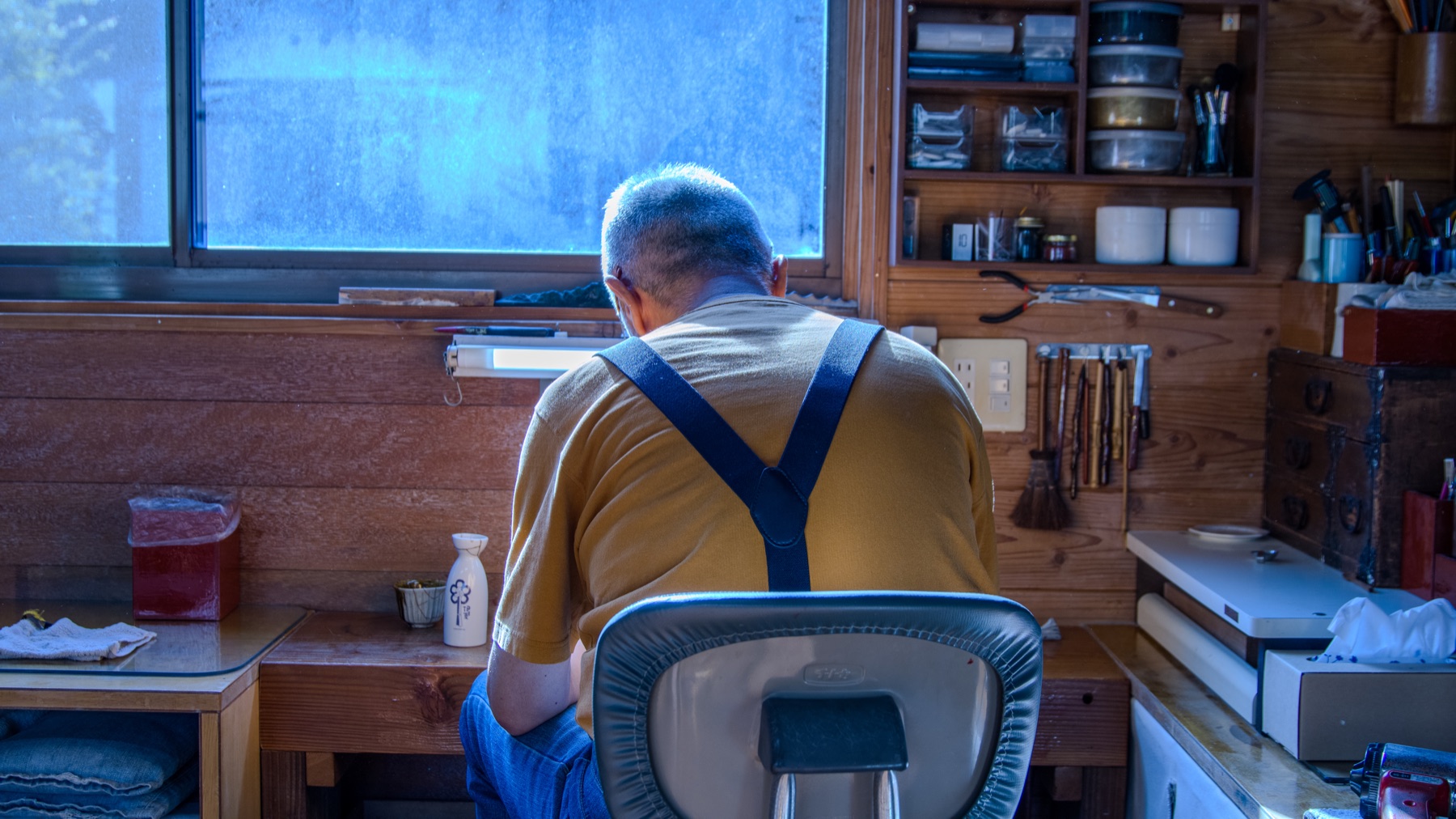
The hand is the first material of the studio. Before urushi can be applied, before gold can be sown, before a seam can be composed, there is the hand that has spent years learning to do the work without ornament. A finished seam two millimetres in width is the visible outcome of a discipline measured in years.
The hands of Hizensui share a temperament. They are unhurried, attentive, and slightly suspicious of any process that promises to shorten itself. They prefer winter to summer for the precision of certain steps, and they read the weather as a working condition. They are not nostalgic about their craft; they simply do it.
What the studio protects is the time these hands need. Urushi cures on its own clock, in its own air. Gold sets at its own moment of tack. The studio waits, where waiting is required, and never asks the product to move faster than the material allows. Every product that leaves the studio has passed through these hands. That is the only signature the product is asked to carry.
Saga, the country of porcelain.
On the heritage region in which the studio is rooted, and on the centuries of fire that begin its story.
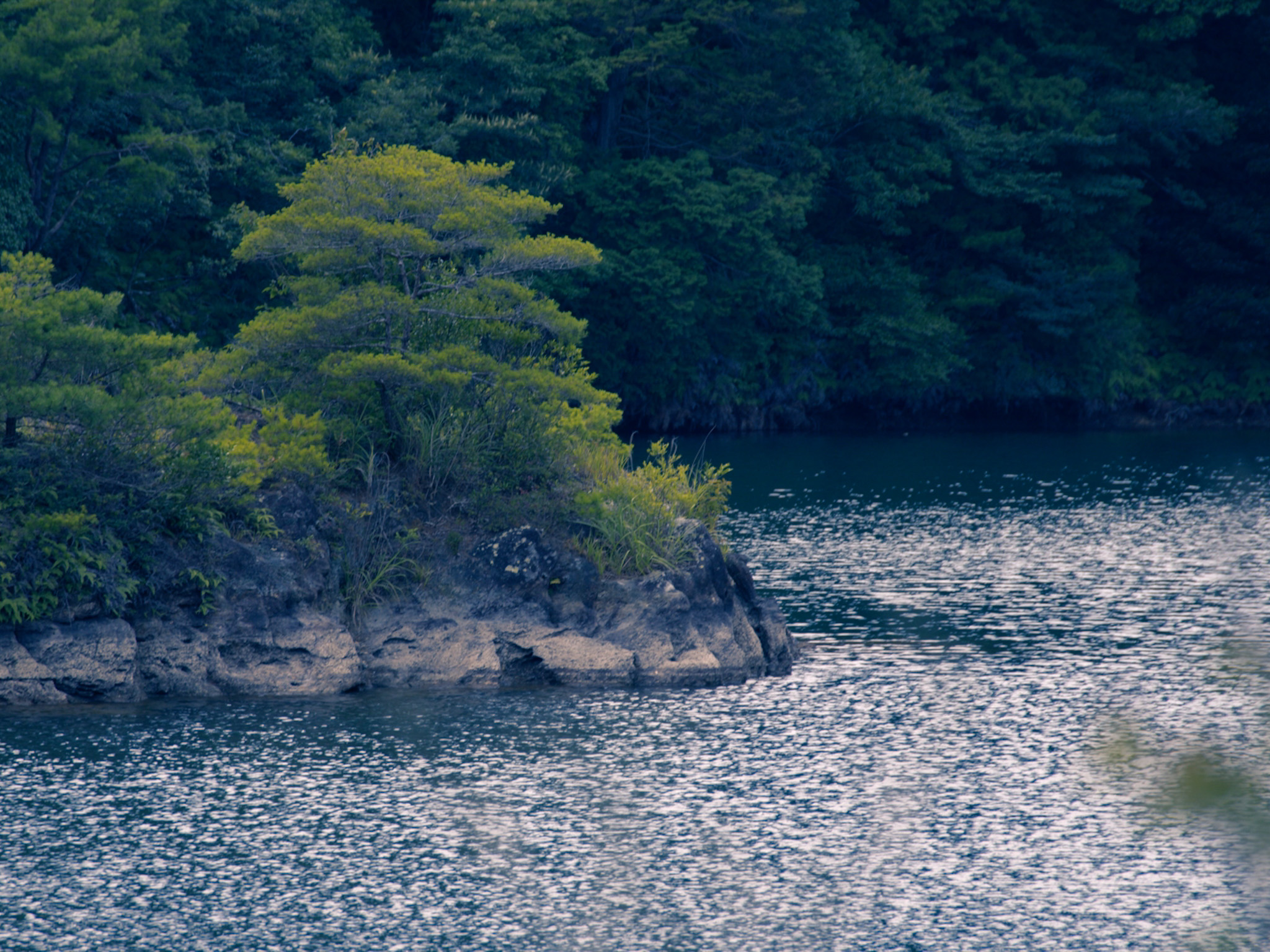
Saga, on the western edge of Kyushu, is where Japanese porcelain first found its voice. To stand in this landscape is to stand at the source of a tradition that begins in the early seventeenth century, and that has not gone quiet since.
In 1616, deposits of porcelain stone were identified at Izumiyama, in the hills around Arita. The first true porcelain ever fired on Japanese soil came out of that region. In the decades that followed, the wares of Arita and Imari crossed the seas — carried to Europe in the holds of the Dutch East India Company — and reached the cabinets of European princes, who built porcelain rooms in their palaces specifically to display them. For a moment in the seventeenth and eighteenth centuries, the porcelain of Saga was among the most coveted objects on earth.
Karatsu ware, fired in Saga since the late sixteenth century and refined within the tea ceremony, sits in the same lineage. The work of Arita, Imari, Karatsu, and the smaller traditions of the region has not been interrupted in four hundred years.
The materials that enter the studio's compositions are drawn from this geography. Hizensui begins downstream of this lineage and composes forward from it.
How a kintsugi-design product is composed.
On the process by which a Hizensui product is brought into being — from a first drawing to the finished object.
Each Hizensui product begins as a drawing. The Founder imagines the form, the material, and — in broad outline — where the seam will run. The seam, in this studio, is the product's primary line. But its exact path cannot be drawn on paper alone. A break is not perfectly controllable; the body decides where it will part. Between what was imagined and what the material answers, the seam takes its form.
From the drawing onward: porcelain from Arita is fired into a body that is asked to part. Urushi is matured for at least one season. Gold powder is set aside for the seam. Where the form requires it, lacquer-wood, hand-blown glass. Each material arrives in the condition that fits the place it has been given.
The composition itself proceeds in stages, each set by the material rather than the calendar. The body is parted along the line of the seam. The parts are rejoined with a paste of urushi mixed with rice flour, and the piece is returned to a cure environment for the first long waiting. Subsequent stages — the filling of the seam, the levelling, the careful preparation of the surface to which the gold powder will be sown — each demand their own coats of lacquer and their own waits. None of the waits are optional. Urushi hardens by absorbing humidity from the air, on its own schedule, which is altered by weather and season but never by impatience.
The final stage is the sowing of gold powder onto a freshly-laid coat of lacquer, by a brush whose density and hair length are chosen for the seam in front of it. The gold is then burnished. The piece returns to cure one last time.
Urushi, and gold.
On the two materials a kintsugi seam is made of, and on what each of them does.
A kintsugi seam is made of two materials. Whatever the body of the product is — porcelain, glass, the metal a stone is set into — it is the thing that carries the line. The line itself is urushi, finished in gold.
Urushi is the sap of the urushi tree, tapped by hand and refined for at least one season before it meets the product. It is not a varnish laid over a finished object; it is the material the seam is built from. The join is made with urushi thickened to a paste, then filled and levelled with further coats, each one cured slowly in humidity rather than in heat. Weeks pass between the first coat and the last.
Gold arrives at the very end, and only once. It is ground to keshifun — a powder finer than dust — and sown onto the final coat of urushi at the moment the lacquer turns tacky, then left to cure and burnished. Hizensui composes with powder only; never with leaf. Powder takes the light unevenly along the length of a line, and that is what gives a seam its depth.
This is why the seam can be the most carefully finished part of an object rather than the least. The gold does not repair the break and does not conceal it. It makes visible the line the urushi has already drawn, and declares the join as the line the eye should follow.
The studio begins from that discipline and extends it. In a product that has never been broken, the same two materials draw a line that was designed rather than suffered — and the patience the urushi asks for is the same either way.